

Table of Contents
Today’s homes no longer have a single television in the living room. Modern families juggle between remote work, online learning, entertaining, and shared time. This usually occurs all at once. For houses with kids, fixed screens quickly become a daily frustration rather than offering convenience.
According to The NewYork Times, in 2025, flexible TV screens benefits children. It’s mainly through enhanced learning, creativity, and connection. The screen offers interactive educational content. This fosters digital skills like coding and encourages family time.
If you are experiencing similar fixed screen problems, this blog can help. We will discuss why traditional setups fail. And how the flexible screen upgrades your experience. Instead of concentrating on specs, the blog will talk about real routines. Comfort, safety, and shared spaces.
You will learn how changing the family screen setup reduces conflicts, improves usage, and makes it work for both adults and children. Plus the vendor’s details, who sells the best portable TVs.
Fixed Screens Don’t Work Well for Families
One Screen, Too Many Needs
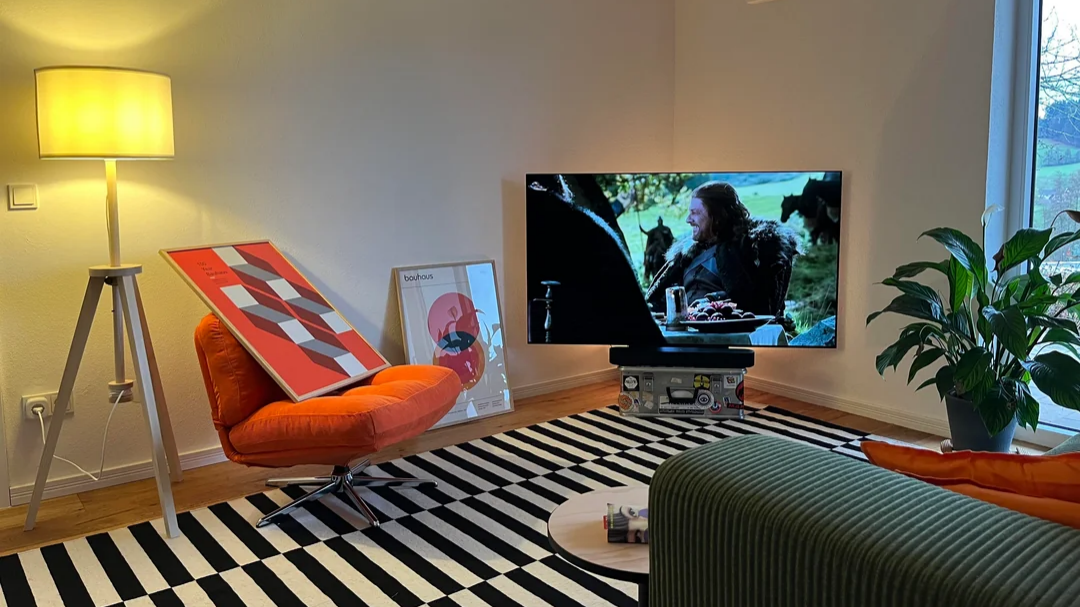
Usually, people buy a single fixed LCD screen to serve everyone. Parents watch the news. Kids want cartoons or games. And sometimes both want to watch different things at the same time. This one screen rarely works in busy households.
When family members rely on one screen, they stop compromising. Conflicts rise. Someone always has to relocate, wait, or give up what they like to watch. Over time, especially in families with different age groups, this creates unnecessary tension around the screen.
Location Issues
A fixed screen compels everyone to gather in one place. In reality, family life is everywhere. Your kids might be doing homework in the dining area. You might be preparing yummy dishes in the kitchen. Your younger child may ask you to supervise their educational content.
A mainstream portable TV sounds like a good idea. But many can’t be moved due to cables, placement, and weird viewing angles. No mobility compels you to reorganize your routines around the device. This results in location issues.
Screen Height
Fixed screens mounted on the walls are usually positioned at an adult’s eye level. Here, kids have to crane their necks upward. Or sitting too close. Initially, it seems fine, but later it can impact the posture. Your children might complain about eye strain and discomfort.
Therefore, an immobile screen doesn’t account for growing children. The same goes for different seating heights or various activities: floor play, drawing, or learning apps.
Screen Sharing Becomes Chaotic
Fixed screen sharing usually becomes chaotic. There is constant remote grabbing, arguments over volume, and fights about what’s on. You are resolving conflicts instead of enjoying shared time.
This makes flexibility more essential. It’s no longer a luxury, but a practical solution to maintain the family harmony.
What Does a Flexible Screen Setup Truly Mean?
A Moving Screen
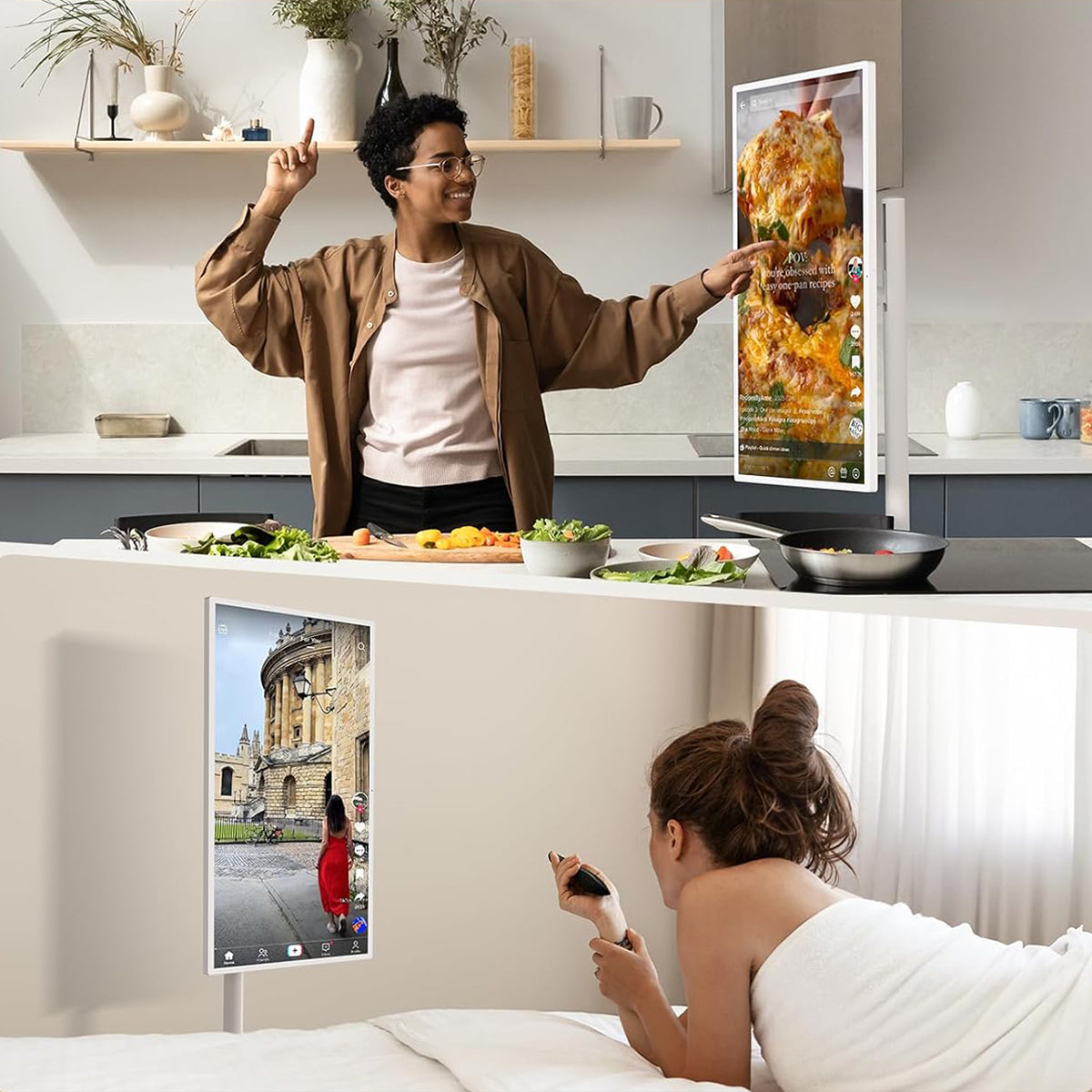
A flexible screen moves. It isn’t tied to one wall or a room. You can move where it’s needed. Roll it in the kitchen, turn on the cartoons. Play homework videos in a bedroom, or host a family movie night in the lounge.

This movement is useful in homes, where space is multi-functional and shared. Instead of purchasing multiple TV screens, one adaptable model can keep everyone happy.
An Adjustable Screen
It also means physical adjustability. In kids, screen height, tilting, ability, and orientation do matter. An adjustable screen layout permits children to comfortably watch content at their eye level. They can see the TV sitting on the floor or table.
Unlike a fixed LCD screen, an adjustable version encourages better posture. And healthier viewing habits for the whole family.
A Routine-Friendly Screen
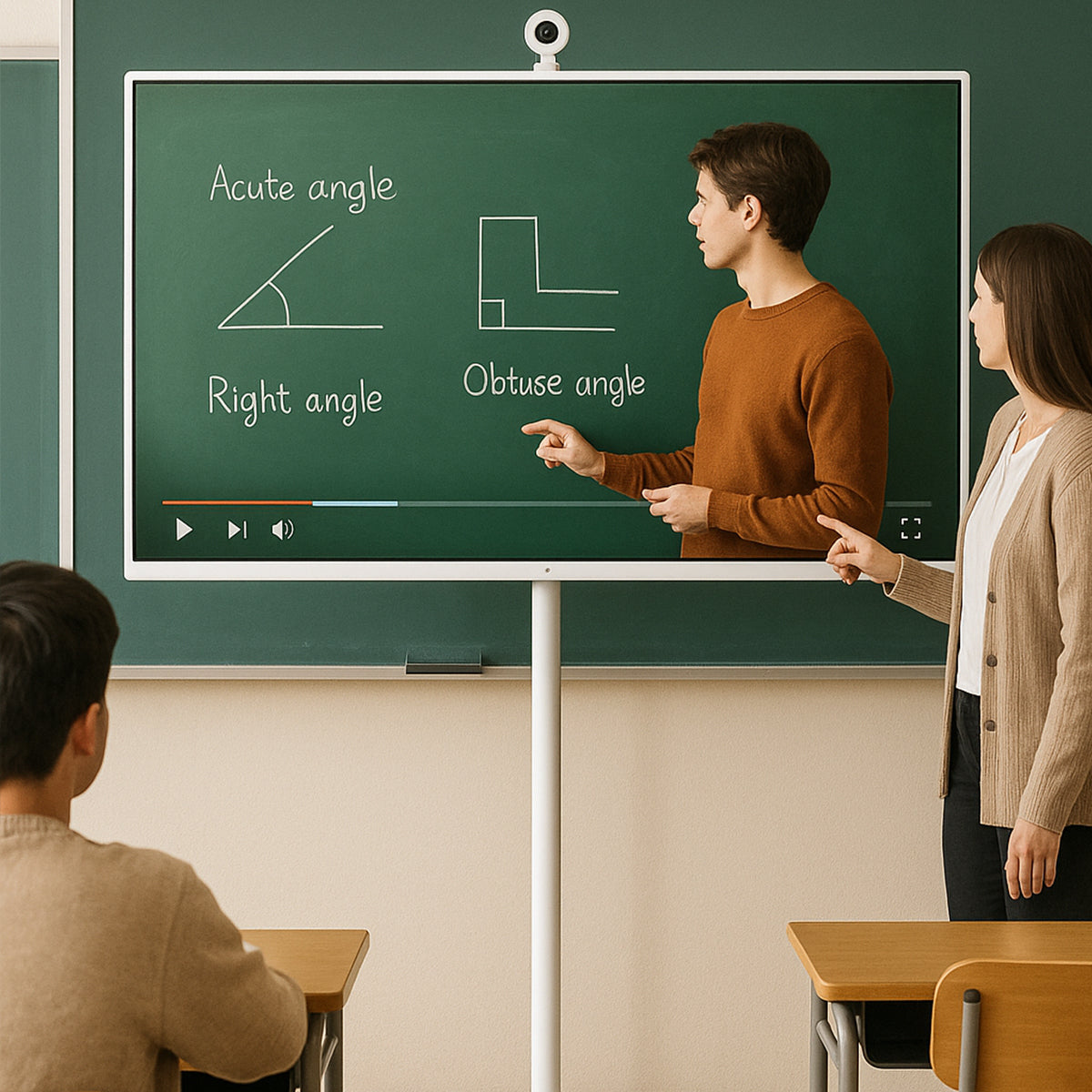
Family routines don’t remain the same throughout the day. The screen being used for educational content at noon might entertain in the evening. A routine-friendly setup is famous for seamlessly adapting to these shifts.
From a static object, the adaptability element changes the family screen setup into a shared household asset, evolving with your daily life.
Safety, Comfort & Shared Spaces
The Screen Adjusts For Kids
Safety and comfort are the priorities for households with children. With an adjustable, flexible screen, parents can position the display at an appropriate height and angle. This minimizes neck strain, poor posture, and eye discomfort.
Younger children can enjoy content at eye level, sitting on the floor. Adults can raise the screen for both seated and standing use.

Furthermore, an adjustable screen promises to grow with the child. It supports healthier viewing habits over time. A fixed LCD screen doesn’t provide such flexibility in homes, where kids move freely between activities, rooms, and shared areas.
Easily Moves
Mobility should boost safety. A compromising one is a major redflag. A sturdy portable TV on wheels moves smoothly. The portable TV doesn’t topple or wobble. The controlled movement across the rooms lets you reposition the flexible screen without lifting, drilling, or organizing loose cables.
The easy rolling reduces accidents, making it simple to adapt the family screen setupin different spaces. You can use it in the kitchen, living room, or study area.
For open-plan layouts or smaller homes, this mobility keeps shared spaces clean and functional.
Touch, Remote & Voice Control
Modern flexible screen setups offer several control options to suit every family member. Touch control is engaging and intuitive for kids. The remote control lets you manage content and settings.
Voice control adds hands-free ease during cooking or cleaning. Three of these options decrease daily disputes. Promotes shared use, makes screen interaction safer, and more comfortable for the entire family.
Ways a Flexible Screen Minimizes Daily Conflicts at Home
Fewer Arguments
Disagreements usually start over who gets to watch. And where should the screen be placed? A mobile flexible screen allows the display to shift between rooms and adjust to different needs. This ends the arguments. Your kids can watch educational videos in one area. Parents can work or cook nearby without disturbance.
Later, you can reposition the portable TV for shared family viewing. As a result, there are fewer power struggles. Encourages cooperation and offers everyone fair watch time.
Enhances Togetherness and Independence
A good family screen setup enhances togetherness and independence. Children can use the screen for entertainment or learning without isolating them in a separate room. Parents can also supervise their content.
Furthermore, families can enjoy shared activities like interactive games or movie nights.
Since the screen isn’t fixed in one location, it naturally becomes part of daily family life. Therefore, no fear of pulling everyone apart.
Multiple Age Groups Can View It
From a child to a senior citizen, everyone has different viewing needs. A flexible setup makes adjusting easy. You can position the screen’s height, angle, and placement for toddlers. Teens and school-aged children.
The flexible screen also allows parents to personalize usage based on activity and age. Unlike a fixed LCD screen, this adaptability simplifies screen-time management. It even helps maintain consistent household rules without constant negotiation.
Easier Household Flow
A movable portable TV has removed the need for rearranging the furniture. Or ask everyone to be in the same room. The flexible screen offers an easier household flow, making daily routines smoother and less stressful.
Is a Flexible Screen Right for Every Family?
Families with Active Kids
A flexible screen benefits homes with young or energetic children. Kids are moving between playing, learning, and resting. A screen that can be repositioned or rolled out of the way adds an extra layer of safety. Parents can move the screen in a supervised area and can relocate afterwards. This reduces risks without disturbing the activities, supporting both freedom and peace of mind.
Shared or Small Living Spaces
Space is limited in apartments or smaller homes. A portable TV on wheels serves multiple purposes, replacing fixed screens. Therefore, instead of getting a permanent LCD screen in every room, one portable TV reduces the mess. But also increases usability, making shared spaces more comfortable for everyone.
Families Balancing Work, Learning & Play
Modern families usually juggle between remote work, online learning, and entertainment under one roof. This makes flexibility important. An adaptable screen helps maintain the structure without sacrificing comfort. A well-designed family screen setup enables parents to work. Children learn, and relax everyone.
When It May Not Be Necessary
Families having multiple fixed screens in every room might not need flexibility. However, a portable TV on wheels can simplify shared activities in these homes.
So, choosing flexibility isn’t about the number of screens. The concept is about how you live, share space, and spend time together as a family.
Summing Up
Rather than forcing everyone to buy a single fixed LCD screen, go for a flexible screen. It adapts to people, routines, and shared spaces. The portable TV improves comfort, lessens conflicts, and boosts your family’s screen experience. Furthermore, if you want such convenience, invest in a portable TV on wheels from GFF AI. Your selection might inspire others to purchase this flexible screen and resume enjoying their regular activities.
About the Author:
Nana Xu is a tech writer and product enthusiast who focuses on smart home devices and innovative display technologies. With a passion for user-friendly design and new trends in consumer electronics, she helps readers make smarter choices for modern living.