


Table of Contents
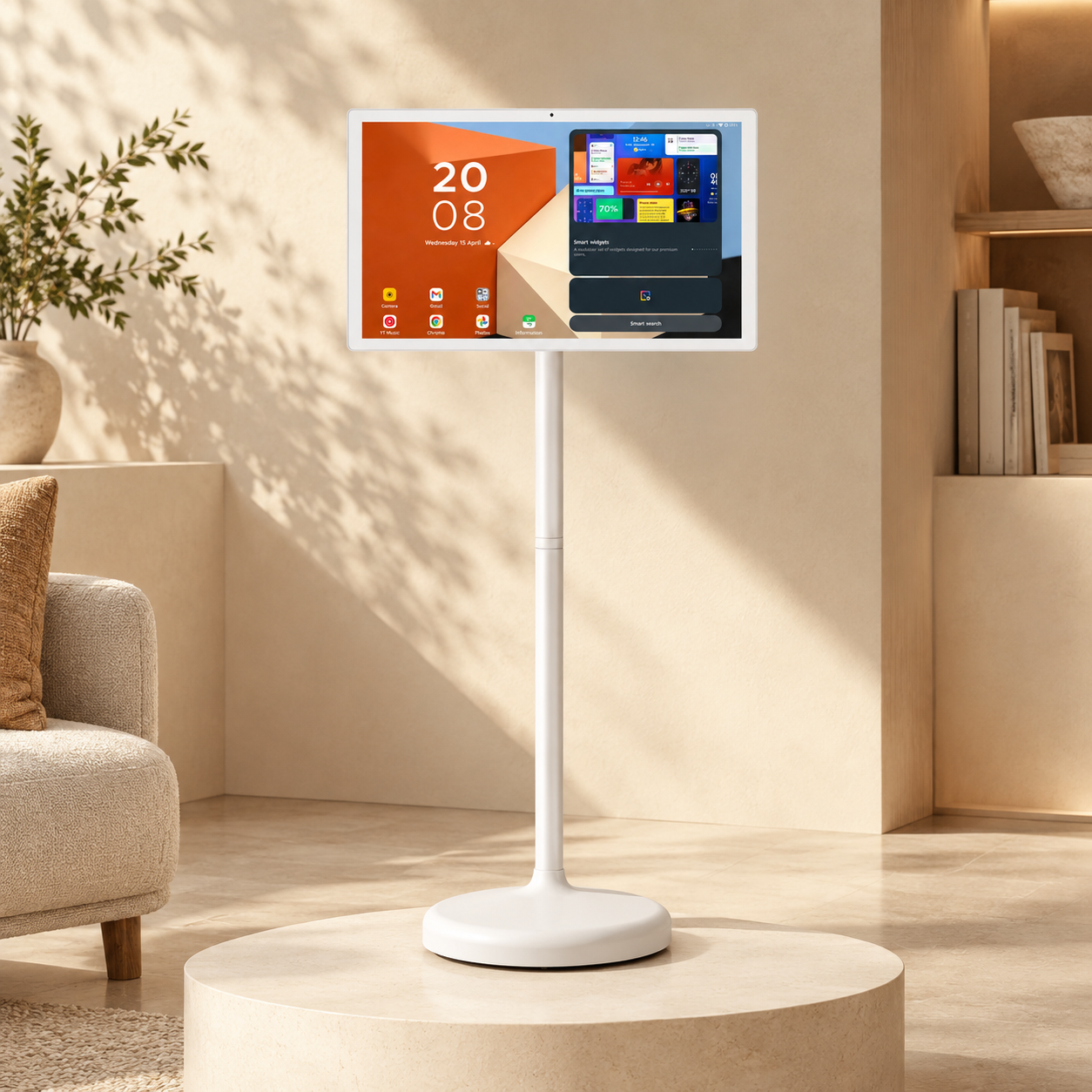
Picture a TV on wheels. Now picture lifting the screen off those wheels and carrying it to the kitchen table. That's a detachable portable TV in a nutshell, and the LG StanbyME 2 is the model most people point to when they talk about it.
Sounds simple. But "detachable" gets thrown around a lot, and it doesn't always mean what you'd hope.
What "Detachable" Actually Means on a Portable TV
Here's the short version. If the screen still plays shows after you pull it off the stand, it's detachable in the way that counts. That only works when the screen carries its own battery, its own apps, and some way to control it without a remote hunt.
Plenty of listings stretch the word, though. Lots of rolling screens come apart just so the factory can squeeze them into a box. You bolt the panel onto the pole on day one and, honestly, it never moves again. Technically detachable? Sure. Useful? Not really.
The kind worth paying for is designed around your day, not the delivery truck. Two pieces do the work:
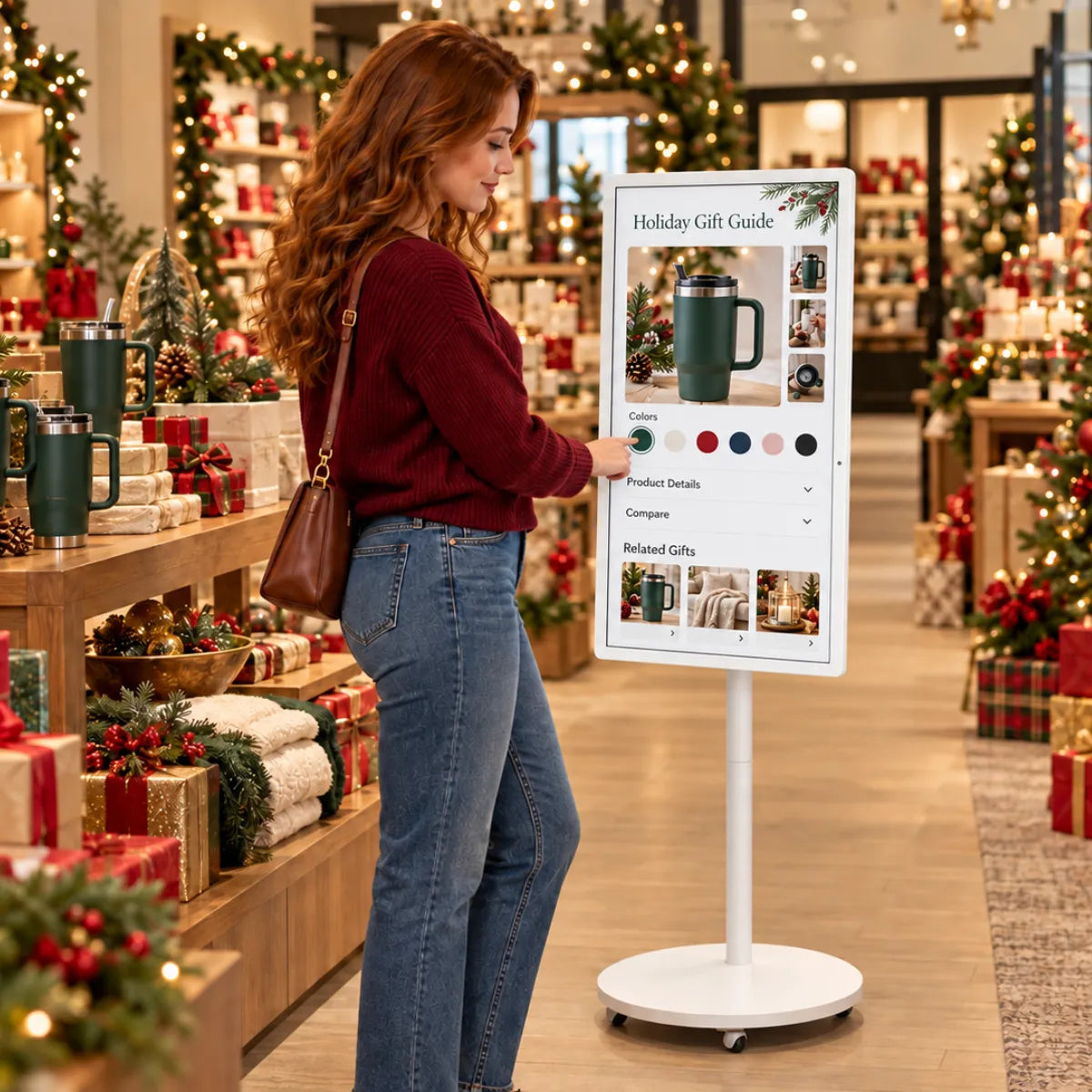
- The stand keeps the screen at eye level and rolls wherever you push it. You can tilt it, turn it, and spin it on its side.
- The screen is a touch display that doesn't need the stand at all once it's off.
Lose either half and something's missing. No stand means a big tablet stuck at table height. No detach means a TV that can't follow you to the kitchen counter.

How the LG StanbyME 2 Makes the Switch
The LG StandbyME 2 shows how this works in real life. Its 27-inch QHD touchscreen (2560 × 1440) comes off the stand in one click. The first StanbyME couldn't do that. Its screen was stuck to the stand for good.
Quick release, no tools
Forget the screwdriver. Release it, lift, and go. And while it's still on the stand, it moves a lot more than you'd guess: 90 degrees of rotation each way, 25 degrees of tilt, and 90 degrees of swivel.
Power on and off the stand
This is the clever part. When the stand's power cable is plugged in, the screen charges by itself while it's docked. Off the stand, the built-in battery gives you up to about four hours of video. Running low? Plug a USB-C cable into it, but check the wattage first. LG says the charger or power bank needs to push 65W or more, so the little brick that came with your phone won't do much.
Everyday use
So what's it like to actually live with? Kind of like someone glued a smart TV to a tablet. LG's webOS is on board, which means Netflix and the usual apps are a tap away. Don't feel like tapping? Talk to it. There's also a small remote with a magnet in it, and it clings to the side of the screen instead of vanishing into the couch. Got something on your phone? Throw it over with AirPlay or Google Cast.
One honest note, though. The screen by itself is about 4.3 kg, or roughly 9.5 lb. Carrying it down the hall? No problem. Holding it on your lap through a whole movie? Your legs might have opinions.
You can find best LG StandbyMe2 alternatives here: LG StanbyME 2 Max Alternatives: 5 Portable TVs Worth Considering
How to Get the Most Out of a Detachable Portable TV on Wheels
The trick is to use both modes on purpose. Here's what that can look like in a normal week:
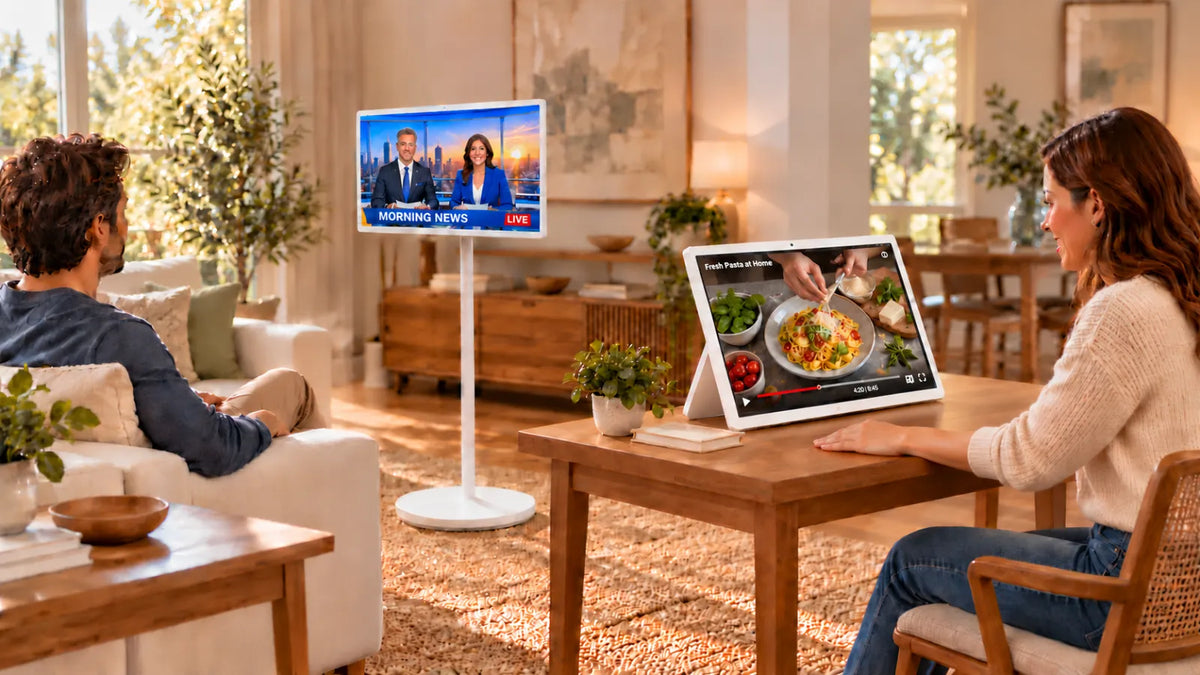
- Morning, kitchen counter. Detach the screen, prop it up, and follow a cooking video without getting your phone greasy.
- Afternoon, desk. Wheel it over, flip it tall, and suddenly that Zoom call doesn't feel like you're squinting through a mail slot.
- Late night. Park it at the end of the bed for one more episode. Then push it back to the hallway, and the bedroom goes back to being a bedroom.
- Weekend, family table. Lay it down for drawing apps or games, and let everyone crowd around one big screen.
- Any sunny day, the patio. Carry it outside for music or a match on battery power.
Some small stuff that helps more than you'd think:
- Get in the habit of clicking it back onto the stand at night. Tomorrow-you gets a full battery.
- If you plan to be off the stand for a whole afternoon, keep a strong USB-C power bank (65W or up) within reach.
- Don't carry it bare. LG itself warns about scratches, and its folio cover also props the screen up like a kickstand.
Why Nothing Else Quite Does This Job
Couldn't you just use a tablet? Or a normal TV? You could. But each one breaks down somewhere.
Tablets? Great on a train, not so great when three people are leaning over your shoulder. A wall TV looks great but never leaves the living room. A rolling TV with a fixed screen moves around, though it can't sit on a counter or a dinner table.
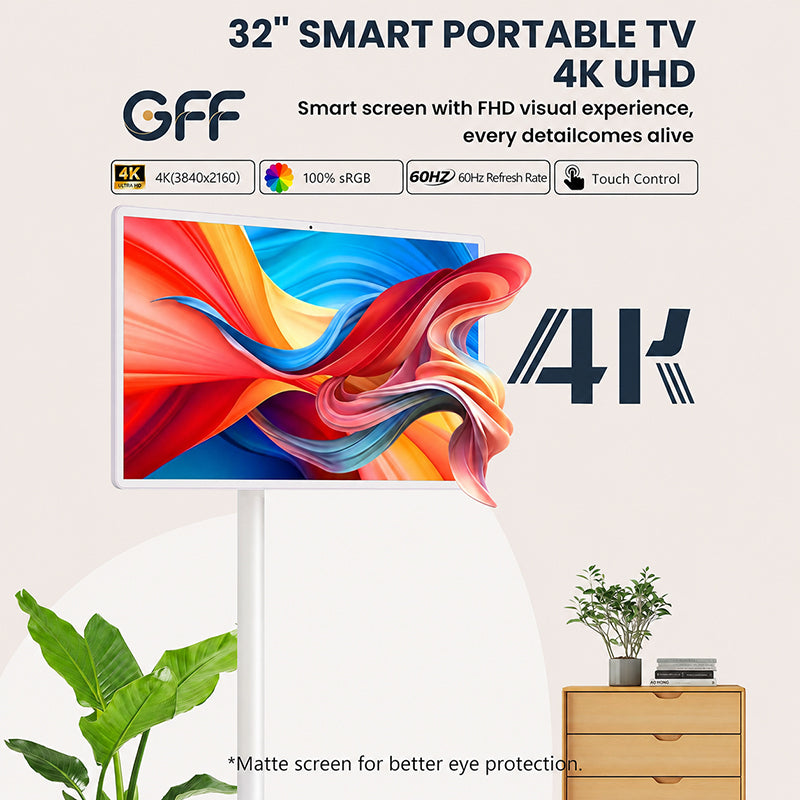
A detachable portable TV fills the gap between all three. It's big enough to share, light enough to carry, and smart enough to run alone. More brands, from Samsung and Hisense to newer names like GFF, are building rolling screens, and the detachable design is the feature to watch as the category grows.
The catch is price. The LG StanbyME 2 launched at $1,299.99 in the US, which is more than many standard TVs. You're paying for flexibility, not inches.
FAQ
1. What is a detachable portable TV?
Think of it as a TV on a rolling stand whose screen you can take off and keep using. The battery, apps, and touch controls live in the screen, not the stand. So once it's off, it acts a lot like an oversized tablet.
2. Does the LG StanbyME 2 screen come off the stand?
Yep. One click and it's off. From there it can lean on a table, hang on a wall (LG sells a strap and holder for that), or just come along with you from room to room.
3. How long does the battery last off the stand?
LG rates the StanbyME 2 for up to about four hours of video. Need longer? The 32-inch 4K Max version is rated a bit higher, at up to 4.5 hours. Crank the brightness and you'll get less.
4. Can I charge it without the stand?
You can, through the USB-C port. The catch is power. Anything under 65W won't keep up, so check the label on your charger before you count on it.
5. Is a detachable portable TV worth it?
That depends on how you watch. Bounce between rooms all day, and this kind of screen makes a lot of sense. Always on the same couch spot? Then save the money and get a bigger regular TV.
Final Thoughts
What makes these screens interesting isn't any one spec. It's that they stop you choosing between a TV and a tablet. Roll it around when you want a TV. Pull it off when you don't.
My advice before you buy? Walk around your place and count the spots you'd honestly use it. Kitchen, desk, bed, patio, wherever. If that list is long, start comparing battery life, screen size, and how fast the screen comes free. If it's short, a normal TV might be the smarter buy.