

Table of Contents
- Outdoor TV vs Portable TV: What's the Real Difference?
- Key Differences at a Glance
- Installation and Setup: Which One Gets You Watching Faster?
- Weather Protection: Built to Last vs Built to Move
- Mobility and Convenience: Where Portable TVs Shine
- Backyard Entertainment Setup Ideas with a Portable Smart TV
- FAQ
Short answer: get a portable smart TV if you want something quick and easy to move around the yard. Get an outdoor TV if you want a screen that just lives outside, rain or shine, and never has to come in. That's really the core of it and everything else below is just filling in the "why."
Outdoor TV vs Portable TV: What's the Real Difference?
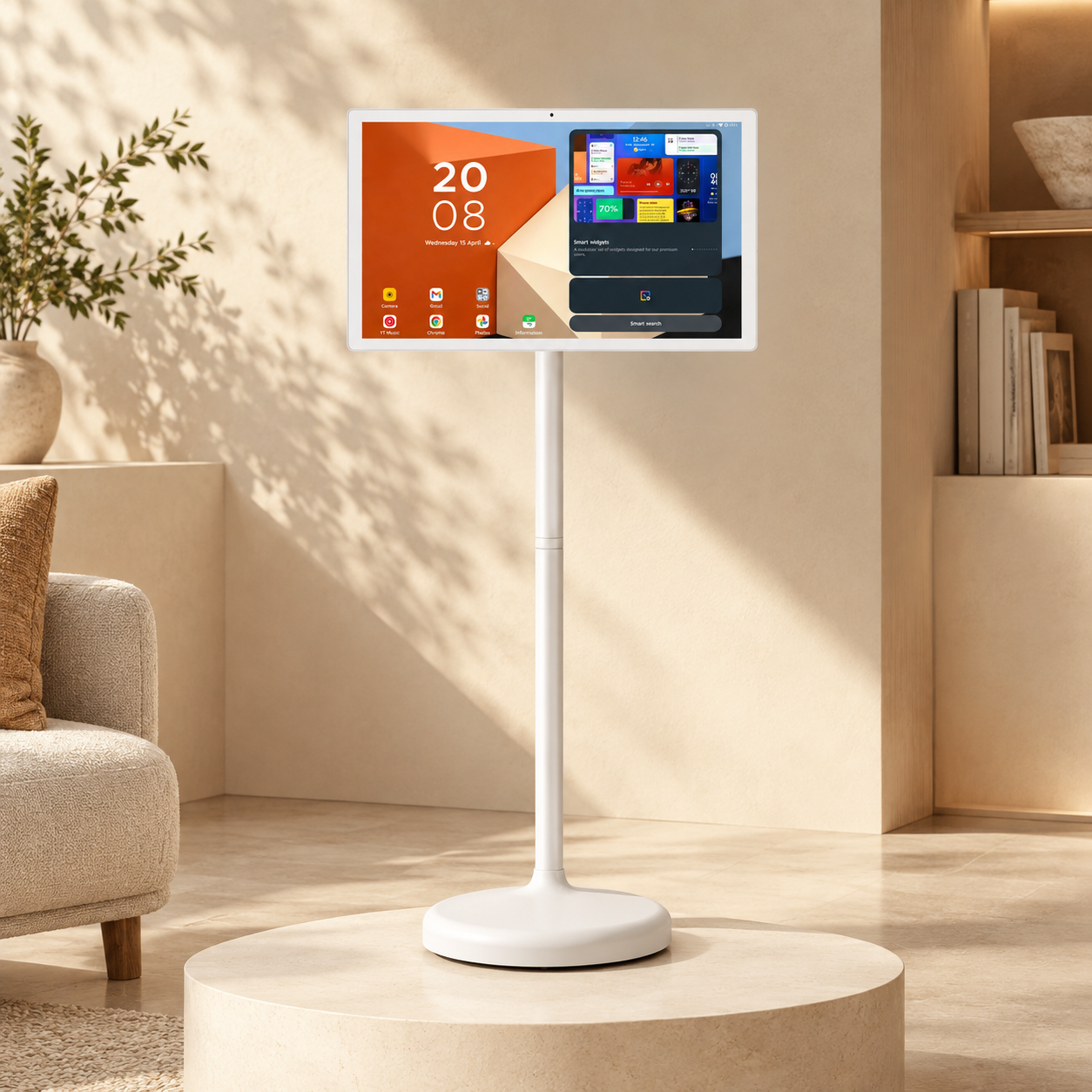
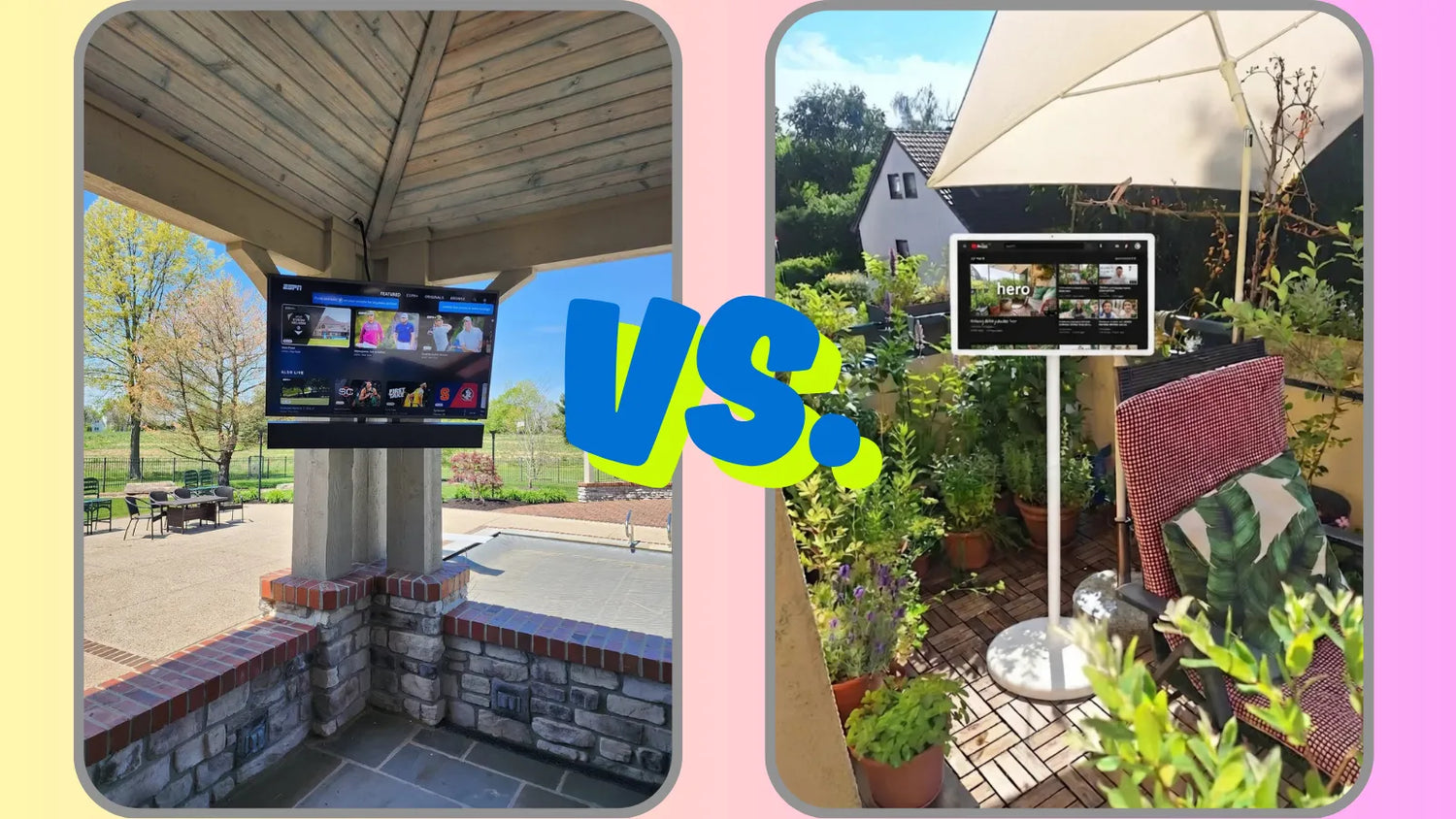
An outdoor TV stays put. It's got a weatherproof shell, a screen bright enough to fight off direct sun, and it's usually bolted to a wall or stand somewhere it won't move again. On the other hand, a portable TV is the opposite story, light, often battery-powered, and built so you can drag it from the porch to the pool without thinking twice.
The difference comes down to permanence and flexibility; an outdoor TV becomes part of your backyard, while a portable TV moves with you from the patio to the pool, firepit, or anywhere else you want to watch.

Key Differences at a Glance
| Feature | Outdoor TV | Portable TV |
|---|---|---|
| Installation | Requires mounting and may need professional installation. | Ready to use after unboxing, charging, or plugging it in. |
| Weather protection | Built to handle rain, humidity, and temperature changes. | Needs gentler handling and should not remain exposed to bad weather. |
| Mobility | Stays in one fixed location. | Easy to move around the backyard. |
| Immediate usability | Requires more setup before use. | Can be used almost immediately. |
| Viewing performance | Usually offers better visibility in bright sunlight. | Performance in bright light varies, so check the screen specifications. |
| Convenience | Best for people who always watch from the same area. | Best for people who want to change their viewing location. |
Installation and Setup: Which One Gets You Watching Faster?
Want to start watching tonight? A portable TV gets you there faster. Charge it or plug it in, and you are ready to go. No mounting bracket, no cables running through the wall, and no waiting for an installer.
Outdoor TVs make you work for it a little. They're meant to stay outside for years, so you're looking at a weatherproof mount, a power source nearby, and, this part matters, probably a professional install so the seal against moisture actually holds.
Skip that step, and you might regret it come the first big rainstorm. More effort up front, sure. But you set it up once and basically forget about it.

Weather Protection: Built to Last vs Built to Move
This is really where they split. Outdoor TVs are tough: rain, humidity, dust, heat, cold, all of it; they're made to just take it. Leave one out through a nasty spring storm, and it won't care.
Portables, not so much. A little sun or a stray raindrop, fine. Leaving one out overnight through an actual storm? That's asking for a bad time. Simple rule I'd follow: use it, then bring it in.
Mobility and Convenience: Where Portable TVs Shine
This category basically belongs to portables. Backyard that shifts from pool day to firepit night to a random Tuesday dinner on the patio? A portable smart TV just follows along. You're not stuck in one viewing spot, and setting it back up takes less time than it took to read this sentence.
It's also just a smart pick if you rent, or if a permanent outdoor install feels like more commitment than you're ready for right now.

Backyard Entertainment Setup Ideas with a Portable Smart TV
Portable TVs are still relatively new to many, so here are a few ways people actually use them outside:
- Poolside movie nights: Set it on a side table by the pool. No cords stretched across the grass for someone to trip over.
- Firepit viewing: Prop it near the fire so people are actually watching together, not hunched over somebody's phone.
- Patio dinners: Let the speakers run some music or a show in the background while everyone's eating.
- Game day on the go: Follow the shade. Move it wherever the glare isn't hitting the screen.
- Camping-style setup: Got a battery model? Take it further into the yard, or bring it camping, no outlet required.
FAQ
1. Is an outdoor TV worth it if I only watch a few times a month?
No, not really. An outdoor TV makes more sense for frequent, regular use; if you're only watching occasionally, a portable TV costs less and skips the installation work entirely.
2. Can I leave a portable TV outside overnight?
No, you shouldn't leave a portable TV outside overnight. Most portable models aren't built for long stretches of weather exposure, so bringing it in after each use helps it last a lot longer.
3. Do outdoor TVs need special outlets?
Yes, outdoor TVs typically need a weatherproof power outlet. That's worth checking before you settle on where to install it.
4. Which one has better picture quality in direct sunlight?
Outdoor TVs have better picture quality in direct sunlight. They're built with brighter screens made specifically to handle that kind of glare, something most portable models can't fully match.
Conclusion
Go with an outdoor TV if you want a permanent screen built to handle the weather. Go with a portable TV if you want something flexible you can move around as your plans change. That's really the whole decision.
Both, honestly, can turn your backyard into a genuinely good spot to catch a movie or the game, that part's not up for debate. It really just comes down to whether you want a fixture or something you can grab and go. Ready to bring your backyard entertainment to life? Explore your options today and pick whichever setup actually fits how you use your outdoor space.