

Table of Contents
The right portable TV comes down to three things: where you'll use it, how long the battery needs to last, and whether you want it on wheels or in your hands. Get those three answers sorted, and the rest is easy.
A portable TV isn't just a smaller copy of the one in your living room. Some roll around on stands, so you can push them from the kitchen to the bedroom in seconds. Others run on batteries, which means you can watch even when there's no outlet close by.
And a few have touch screens, so you tap and swipe like you would on a big tablet. Since each type does something different, it's worth walking through them before you pick one.
What Counts as a Portable TV?
A portable TV is any TV made to move easily. That might mean wheels, a battery pack, a light frame, or all three at once.
Because they're so easy to move, you'll find them in bedrooms, dorms, garages, campers, and small apartments, especially in spots where mounting a TV to the wall just isn't worth it.
Types of Portable TVs
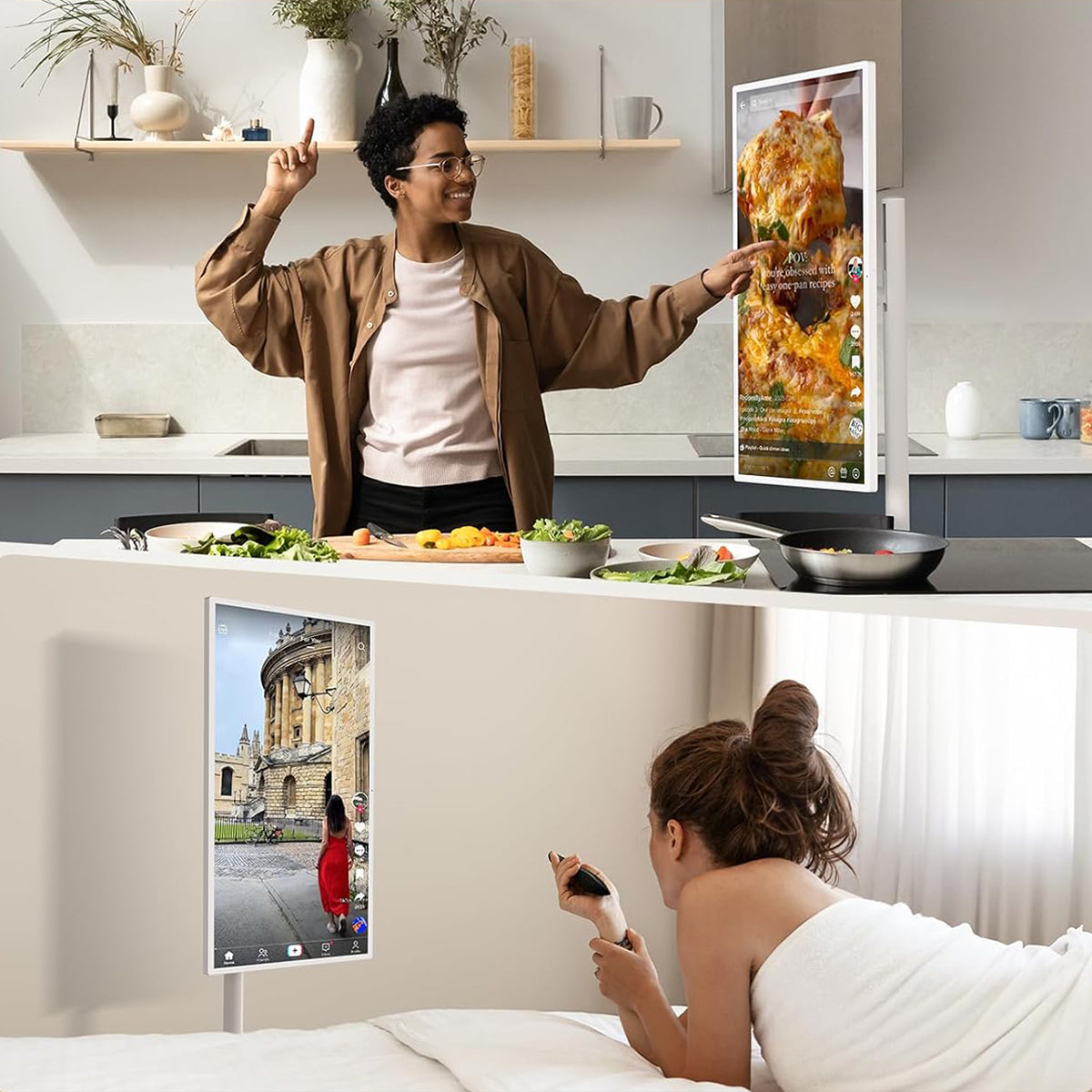
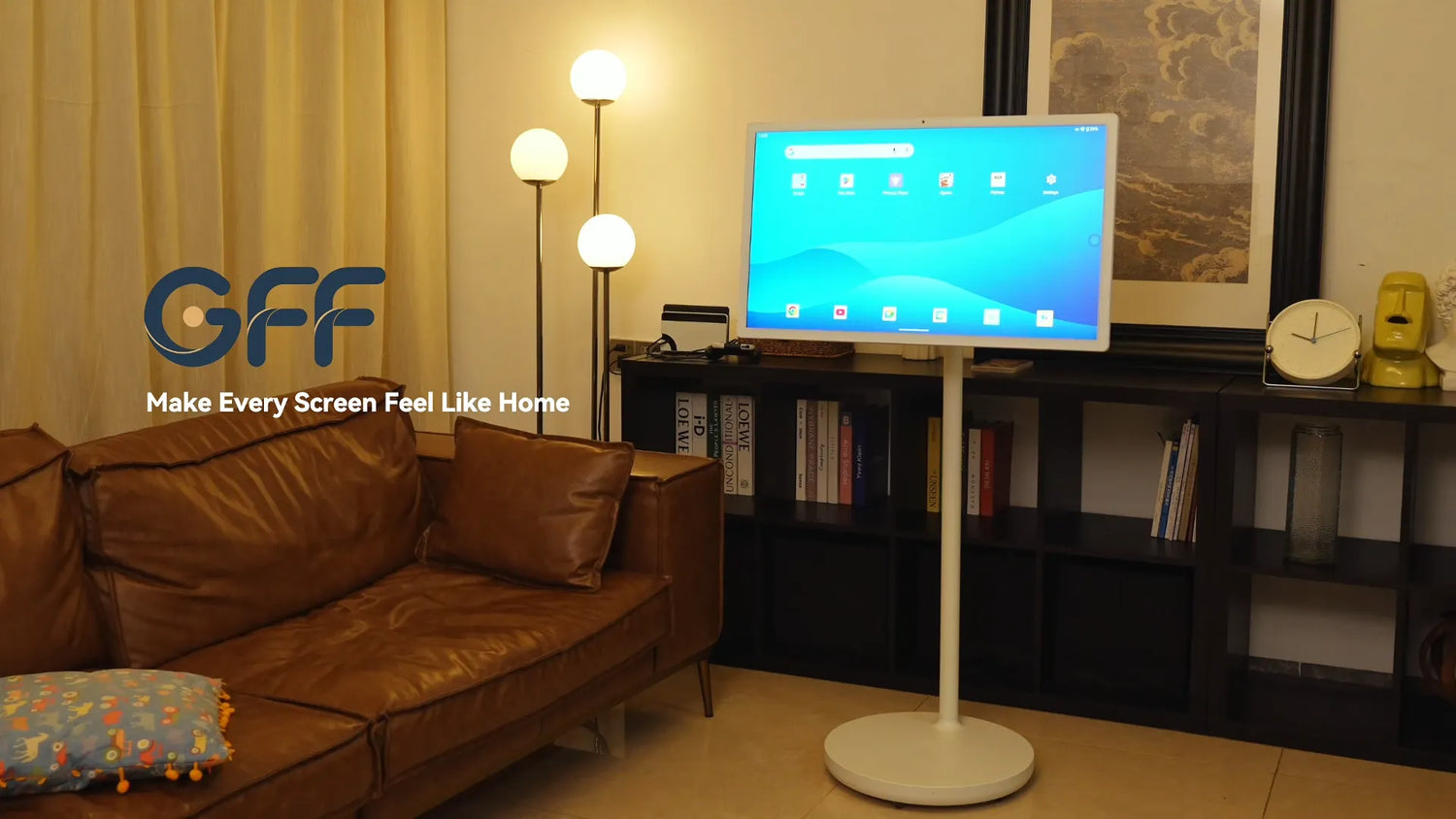
Portable TV on Wheels
This type sits on a rolling stand. Push it from one room to the next, and you're done. No lifting, no fuss. It's a solid pick for:
- Families sharing one TV across a few rooms
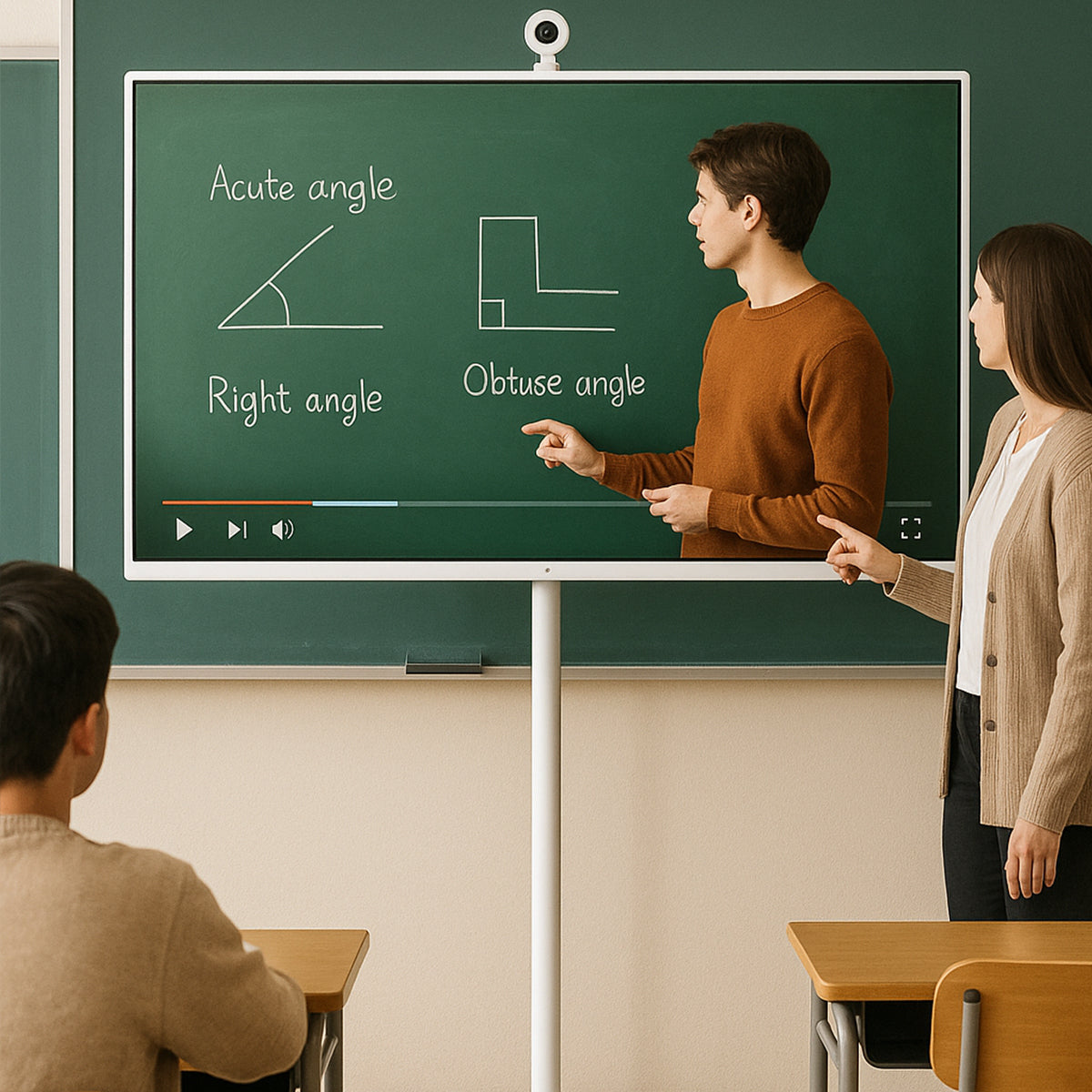
- Offices that move a screen between meeting spaces
- Anyone who rearranges furniture a lot and doesn't want to remount a TV every time
- What makes this option stand out is how steady it stays. A good rolling stand keeps the screen at eye level, even when you're pushing it across hardwood or tile.

Touch Screen TV
A touch screen TV skips the remote. You just tap the screen, and that's it. This tends to work well for:
- Kids' rooms, since a lost remote turns into a daily headache
- Smart homes, because touch controls often pair with apps and voice assistants
- Anyone who wants to switch inputs fast, without digging through a drawer
- Touch screens also double as smart displays. So you can check the weather or play a song without turning on a whole show first.

Battery Portable TV
This one's built for freedom. No cord, no outlet, no problem, and it goes wherever you go.
A battery portable TV can run for hours on one charge. That makes it a great fit for:
- Camping trips and tailgates
- Power outages, when you still want the news or a movie
- Backyards, garages, or job sites without an easy outlet
Battery life can swing a lot between models, though, so check this closely before you buy.
Rolling TV Stand + TV Combination
In addition to the all‑in‑one TV‑on‑wheels and touch‑screen interactive displays mentioned earlier, the market has also seen a more flexible and down‑to‑earth option emerge—the Rolling TV Stand + TV Combination. Rather than being an entirely new product category, this is more of a "modular" solution: you buy a mobile stand with swivel casters separately, then mount your existing regular TV—or a brand‑new set of any brand—onto it.

Different Types of Portable TVs Explained
| Type | Best For | Advantages | Limitations |
|---|---|---|---|
| Portable TV on Wheels | Home entertainment | All-in-one mobility | Higher price |
| Touch Screen TV | Interactive use | Touch features | Not necessary for everyone |
| Rolling TV Stand Setup | Budget users | Affordable | Less integrated |
| Battery Portable TV | Outdoor/travel | Easy transport | Smaller screen |
Key Factors to Consider When Buying a Portable TV
Before you add one to your cart, run through this list first.
- Screen size: Smaller screens, around 13 to 24 inches, work well in bedrooms and
- kitchens. Bigger models, 32 inches and up, suit shared spaces better.
- Battery life: Going with a battery model? Look for at least three to five hours of runtime, and more if you're planning longer trips.
- Weight and build: A lighter TV is easier to carry, but check that the stand or handle still feels sturdy.
- Screen resolution: HD is fine for casual watching. 4K starts to matter once you sit close or stream a lot of detail.
- Connectivity: Look for HDMI ports, Wi-Fi, and Bluetooth, since most streaming apps and soundbars need them.
- Stand stability: Check if the wheels lock in place. You don't want your TV drifting mid-movie.
- Touch responsiveness: Read reviews on lag time before buying a touch screen model. A slow screen gets old fast.
- Warranty and support: Portable TVs get bumped and moved a lot, so a solid warranty is worth the extra look.
FAQ
1. How long do battery portable TVs actually last?
Most run three to eight hours per charge. It depends on screen size and brightness, since bigger, brighter screens drain the battery faster.
2. Are touch screen TVs harder to maintain than regular TVs?
Not really. Wipe the screen now and then to keep fingerprints off. Everything else stays about the same as a standard TV.
3. Can a portable TV on wheels support wall-mount brackets too?
Many rolling stands are made to stand alone only. So if wall-mounting might come up later, check the specs first.
4. Is a portable TV a good fit for outdoor use?
Battery models handle short stretches outdoors well, especially in the shade. Just check the brightness rating if you'll be watching in direct sun.
5. Do portable TVs cost more than regular TVs of the same size?
Sometimes, yes. The stand, battery, or touch features all add to the price. Still, you're paying for flexibility a fixed TV can't give you.
Final Thoughts
Picking a portable TV really comes down to how you'll use it. Moving it between rooms? Go with a rolling stand. Want hands-free control? A touch screen makes life easier. Need to watch anywhere, anytime? A battery model has you covered.
Whatever you choose, keep screen size, battery life, and stand stability near the top of your list. Ready to find the portable TV that fits your space and your life? Start comparing models today, and pick the one that matches how you actually live.